Research Summary - Project-Based Learning in Middle Grades Mathematics (January 2008)
NMSA Home    l    NMSA Store    l    Annual Conference    l    Month of the Young Adolescent    l    Contact NMSA
Sunday, March 21, 2010
yellow
National Middle School Association
Home > Research > Research Summaries > Project-Based Learning in Math
Get Connected
What's New from NMSA
Monthly eNewsletter about upcoming events and new products from NMSA.

The Marketplace
A showcase of products and services designed for schools and classrooms.

Job Connection
Browse resumes or post employment opportunities.

RSS Feeds
NMSA RSS feeds keep you up to date on middle grades news and headlines.

NMSA09 Conference Connections
Extend the experience of the annual conference beyond the three days on-site.

TwitterTwitter@NMSAnews
You can now follow NMSA News and Headlines @Twitter.

FacebookNMSA on Facebook
Become a fan. Visit NMSA's fan page on Facebook.


NMSA Research Summary

Project-Based Learning in Middle Grades Mathematics
(January 2008)


PDF Version

In support of This We Believe characteristic:

  • Students and teachers engaged in active learning
  • Curriculum that is relevant, challenging, integrative, and exploratory
  • Multiple learning and teaching approaches that respond to their diversity
  • Assessment and evaluation programs that promote quality learning

The focus of this research summary is to foster an understanding of project-based learning (PBL), particularly in mathematics education; to explain the factors for making a conscious decision to implement PBL in middle grades mathematics classrooms; and to provide insights about the possible realized effects when mathematics-based PBL is implemented.

What is and What is Not Project-Based Learning (PBL)

A number of terms are used to describe inquiry- and project-focused teaching and learning that is supported by best practices and research-based approaches. Project-based learning typically begins with an understanding of a clearly defined end product. This is in contrast to problem-based learning, which is focused on a problem students are expected solve in idiosyncratic ways and is subsumed under project-based learning. Problem-based instruction is generally situated around a problem statement that allows for unique learning destinations. While the learning context is common to all groups, the paths may differ considerably—all leading to distinct learning. In project-based learning, on the other hand, all students engage in a common project with unclear processes but clearly identified expected outcomes.

Evolving from medical and engineering schools, project-based learning includes an emphasis on students constructing individualistic and shared understandings of important content and concepts as they explore the learning context (Schneider, Krajcik, Marx, & Soloway, 2002). Some of the learning event information may initially be useless, and some parts may be interesting; but, generally, this ambiguity may make students and, occasionally, teachers uncomfortable. However, participating in and exploring the learning event often provides the impetus to engage content and develop skills, just as experts do in practice (Ward & Lee, 2002).

With project-based learning (Bodilly, Purnell, Ramsey, & Smith, 1995; Schneider et al., 2002) students constantly pose and refine questions. They design and construct simple and/or complex investigations which require them to gather analyze, and interpret data to report findings. Project-based learning (PBL) has been linked with increased academic achievement (Blumenfeld, Soloway, Marx, Krajcik, Guzdial, & Palincsar, 1991; Boaler, 1998; Cognition and Technology Group at Vanderbilt, 1992; Means & Olson, 1997; Schneider et al.). However, successfully implementing PBL often necessitates extended professional development for teachers, on-site support, and collaboration among the various subject area teachers to achieve the increased academic achievement.

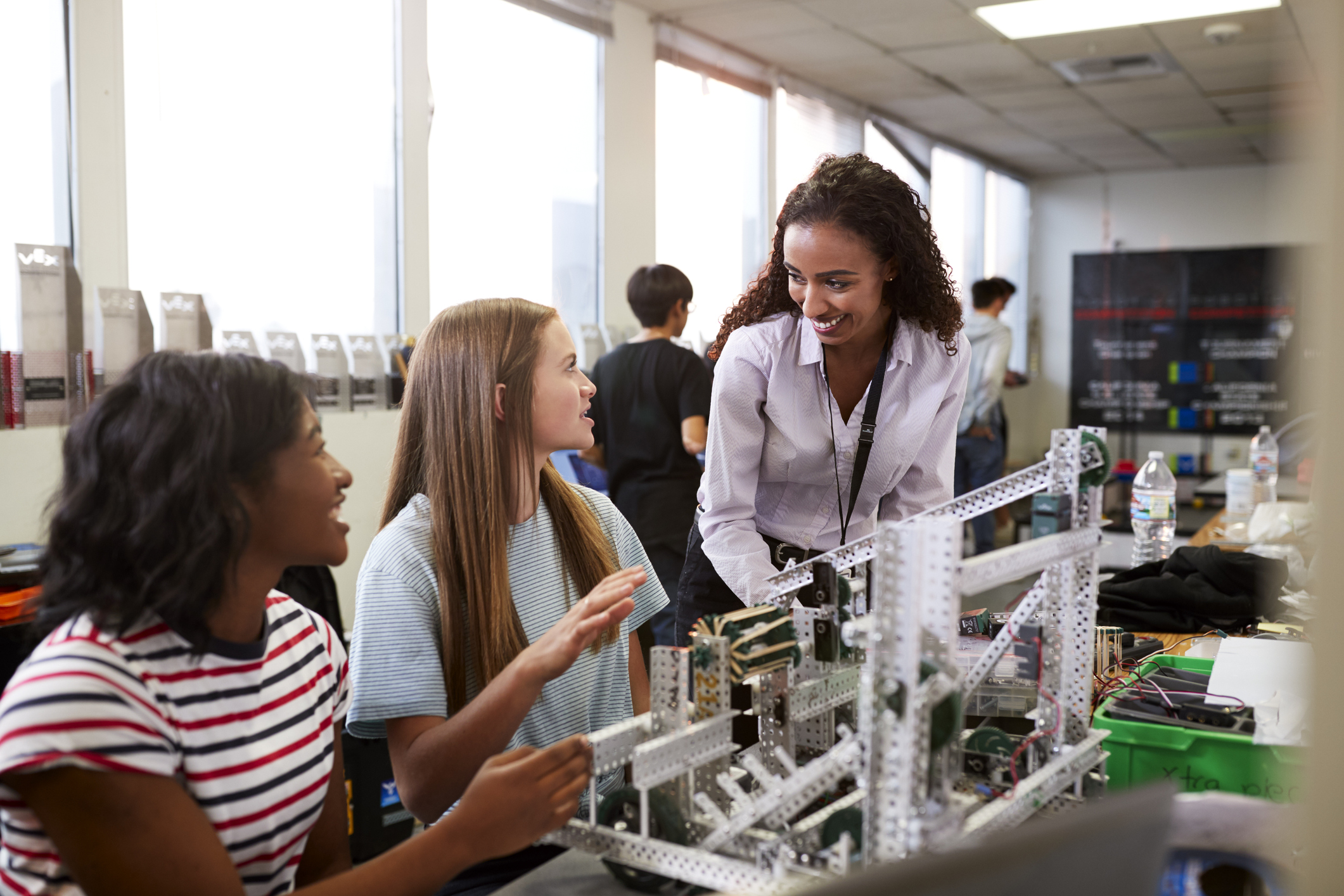
Differentiated instruction is one byproduct of PBL, because this strategy allows for individual student needs to be addressed by several means: purposively assigned groups, multi-tiered evaluation and assessment, and deliberately selected learning tools (Bodilly, Keltner, Purnell, Reichardt, & Schuyler, 1998; Bodilly, Purnell, Ramsey, & Keith, 1996; Bodilly et al., 1995). While the teacher is in partial control of the differentiated learning environment, because the learning task is open ended, the students play an important role in governing their learning. When doing a PBL activity, students are engaged in more idiosyncratic investigations, directing their own learning and making decisions about what they are going to do and how they will do it to achieve target goals. For this to occur, teachers need to create an environment and support a climate where students have the freedom to learn on their own, converse with each other, ask questions, and have autonomy to seek answers from a multitude of resources. Meaningful learning rarely occurs from the traditional lecture method, therefore, students who are engaged with finding a solution to a situation that is personally meaningful make the most of the experience, have increased motivation, and are willing to persist in the task, even when it is complicated, or when they experience minor setbacks (Cross, 1996).

The teacher's belief system is paramount. A teacher who believes that social constructivism (Vygotsky, 1978) or situated learning (Boaler, 1999; Cobb, 1988) is useless, will find the work and effort for accomplishing PBL to outweigh its benefits. The tenets of constructivism, in its many versions, underlie PBL designs (Grant, 2002). In PBL, the teachers' role necessitates that they allow all students to engage in developing personally and collaboratively negotiated meanings from the learning event (Harel & Papert, 1991; Kafai & Resnick, 1996). The success of PBL should be assessed on many levels including emotional development, collaboration, leadership, and negotiation skills that are essential for project success (Glaser, 1992; Glennan, 1998). When teachers allow students more autonomy over what they learn, it improves motivation, and students assume more responsibility for their learning (Tassinari, 1996; Wolk, 1994; Worthy, 2000). However, this does not mitigate the important need for the teacher to be actively engaged in the learning task as both a role model and an advisor. This role also does not forsake whole-group didactic instruction, but makes careful use of it to address learning deficits. The teacher can function as a co-constructor of knowledge (Rosenfeld & Rosenfeld, 2006). In this role, the teacher must possess profound content knowledge, be confident in his or her skill to facilitate learners of diverse abilities, and be prepared to deal with a more diverse set of questions—potentially across disciplines. Consequently, the role of the teacher and this diversity in content raise questions about the scope and style of assessing student learning.

Assessment in PBL takes several forms, generally fitting into two broad classifications—formative and summative. Formative assessments provide insights into the progress students are making on the project as well as their status toward mastery of the outcomes. Formative assessments can consist of authentic assessments including reports, webs of important information, and oral reports of their progress toward completion (Polman, 1999). These formative assessments function to help the teacher determine where students are having difficulty and how to best address those needs. They also give the teacher insights into both group and individual functioning, allowing him or her to make adjustments to group composition, customize learning expectations, and provide selective and targeted remediation and assistance. Comparatively, summative assessments in PBL are often administered at periodic intervals to assess specific aspects of the learning goals. While summative assessments are used to take snapshots of student progress, they also inform the teacher about specific assessment deficits with regard to item construction, testing format, and testing setting (Ronis, 2007). Because of recent accountability issues, summative assessments, more often than not, resemble state high-stakes tests.

Mathematics Project-Based Learning Overview

In general, PBL is a well-known concept with many definitions that probably originated in engineering schools (cf. Barrows, 1986). For the purposes of this research review, the definition is closely aligned with that of inquiry-based learning. Therefore, this review deals with the idea of PBL as ill-defined tasks with clearly stated student expectations (Albanese & Mitchell, 1993; Barrows, 1997; Dempsey, 2002). Occasionally, cited research in this brief may have targeted a sample other than middle schoolers, however, the findings can reasonably be associated with children of all ages and grade bands. There are myriad articles in peer-reviewed journals about mathematics PBLs, however, many are practice based, that is, they are "how tos" or descriptions of successful project-based lessons (Bernt, Turner, & Bernt, 2005; Bombaugh & Jefferys, 2006; Horton, Hedetniemi, Wiegert, & Wagner, 2006; Johnston, 2004; Jones & Kalinowski, 2007; Schooler, 2004). However, a number of empirical research studies exist to assist in guiding the discussion and implementation of mathematics PBL in middle grades classrooms.

A common misconception is that PBL exists in a separate realm, and that realm is specific to one content area. In fact, PBL is richly integrative and multidisciplinary. The usefulness of PBL as a real-world microcosm for students to investigate would provide no further levels of engagement or interest over traditional instruction without the richness of integrating multiple subject areas. Therefore, when one refers to mathematics PBL or PBL in any other content area, that particular content area is the focus or central theme to which assessment is geared within PBL's interdisciplinary content. In addition, regardless of the content focus of the PBL, several important individual student factors essential for increased achievement are addressed. For example, any PBL learning event either mediates or is mediated by motivation/attitude, expertise, and content (Ross, Troutman, Horgan, Maxwell, Laitinen, & Lowther, 1997). The iterative effects of these factors will be discussed from the perspective presented in the literature.

Motivation and Attitude in Mathematics

Motivation and attitude are often undifferentiable in the literature and are used interchangeably because of the dearth of research in this area. However, one can imagine that motivation and attitude are related to realized achievement. Students who are highly motivated and have positive attitudes toward mathematics demonstrate higher success and achievement levels compared to the polar opposites (Ma, 1997; Singh, Granville, & Dika, 2002). Project-based learning emphasizes student autonomy and collaborative learning, which have been found to improve motivation and attitude. Most assessments should be authentic in nature, which allows the evaluation of content learning as well as applied knowledge and real-world skills (Anderman & Midgley, 1998; Grouws & Lembke, 1996; Hart & Allexsaht-Snider, 1996). The mathematics PBL design process has been shown to increase engagement by providing variety, novel challenges, greater student choice, and a break from routine school learning (Bernt, Turner, Bernt, 2005; Blumenfeld et al., 1991; Bodilly et al., 1998).

Building Expertise and Content Knowledge

Assimilating content expertise is a major factor that can have an impact on a person's willingness to engage actively in a project. Each student's perception of his or her own skills on the continuum from novice to expert may either promote or hinder their realized success within mathematics. Project-based learning designs can be attenuated to move students from the novice to expert stage, gradually building the skills necessary for success (cf. Barrows, 1986, 1997) in complex mathematics PBL designs (Blumenfeld, et al., 1991). Research has demonstrated that students who experience PBL as part of their mathematics coursework develop skills associated with increased expertise such as improved metacognitive and self-regulatory skills (Collins, Brown, & Newman, 1991; cf. Glaser, 1992). Accordingly, PBL scenarios should be scaffolded in a way that ensures middle graders progress from the novice to the expert level of inquiry and problem solving. Therefore, it is essential to reproduce conditions under which field experts master their craft and increase their proficiency in conducting investigations (Blumenfeld et al.). This expertise shift from teacher-directed, teacher-assigned work with emphasis on comprehension and assimilation to a student-directed and goal-oriented learning model may lead to vast improvement in what may be considered a status-quo state of research on "knowledge transfer" (Cognition and Technology Group at Vanderbilt, 1992).

Mathematics project-based learning designs generally incorporate scaffolding tools in the form of learning aids, models, and data gathering that help students become experts at conducting inquiry activities (Barron et al., 1998; Meyer, Turner, & Spencer, 1997). For instance, incorporating technology into PBL supports the learning environment and makes it more authentic (Krajcik, Blumenfeld, Marx, & Soloway, 1994).

General Research on Mathematics Project-Based Learning

The effectiveness of PBL is multifaceted and multidimensional. The chosen outcome measure often governs the effectiveness one can expect to achieve. For example, when considering performance on standardized or high-stakes tests, the obtained effects are somewhat consistent (Shepherd, 1998). Generally, mathematics achievement gains lag those in reading and science. However, longitudinally, the mathematics performance of students engaged in PBL is greater than those students who did not participate in PBL (Grant & Branch, 2005; Horton et al., 2006; Johnston, 2004; Jones & Kalinowski, 2007; Ljung & Blackwell, 1996; McMiller, Lee, Saroop, Green, & Johnson, 2006; Toolin, 2004). In the overall literature on PBL, when its implementation is accompanied by sustained and meaningful professional development for teachers, the PBL group demonstrates modest gains over comparison groups (Berands, Kirby, Naftel, & McKelvey, 2001).

While problem solving is not usually the focus of most PBL designs, it is a foundational skill for students. In general, the literature seems to indicate that in PBL environments problem solving ability increased over time (Glennan, 1998; McQuillan & Muncey, 1994; New American Schools, 1999; Northwest Regional Educational Laboratory, 1997; Ross, Saunders, & Wright, 2000). This effect was most pronounced when matched comparison groups were used in pretest and posttest designs (Gallagher, Stepien, Rosenthal, 1992; Stepien, Gallagher, & Workman, 1993). Research has also shown improvement in students' abilities to use their knowledge in more flexible and novel ways (Shepherd, 1998), without sacrificing gains in other areas (Penuel & Means, 2000), which can be a benefit of engaging in problem solving.

Project-based learning can only be considered a useful pedagogical strategy if, through its use, teachers can be reasonably assured that mathematics content and concept development are realized. In several studies employing various methodological designs, increased conceptualization and overall performance have been indicated (Barron et al., 1998; Boaler, 1997, 1998). While much of the mathematics taught and learned is within science-contextualized projects, it is vital to note that mathematics PBL is often considered an informal mathematics education setting.

PBL, Informal Mathematics Education (IME), and Representations

Informal mathematics education plays a significant role in the development of fluid mathematical understandings, creative thinking, and problem solving (Glennan, 1998; McQuillan & Muncey, 1994). It is these fluid understandings that support more complex and abstract mathematical learning in formal settings (Shulman & Armitage, 2005). While many PBL designs are manufactured in classrooms, students encounter numerous informal mathematics learning environments in their everyday lives. For instance, they develop higher-order mathematical thinking skills during shopping as they are faced with complex situations such as applying percentage discounts and sales taxes, they need to understand statistics when they watch sports or design winning strategies as they play games. In these informal mathematics learning settings, students build informal mathematical representations, which are generally proxies for the more abstract versions they will encounter in their formal school environment.

Informal mathematical representational models can take various forms such as visual and concrete models. Visual models assist students in developing internal representations for mathematics, and concrete models allow kinesthetic manipulation. Representation is important to learning because it can be used as a means of communication and reasoning (Capraro & Capraro, 2006). Educators need to allow students to see problems through their own eyes to develop their own understandings and internal representations that can be expressed with an external representation.

It is important to note, " … students will need a variety of representations to support their understanding" (National Council of Teachers of Mathematics, 2000, p. 69). PBL environments provide students projects that involve several representational models of the same mathematics content, which help them to develop understandings that are more robust. These multiple representations can facilitate connections between mathematical ideas and students' ability to express these ideas using formal mathematical language. By encouraging the use of a variety of representations, teachers enable students to become more effective mathematical communicators who can explain their thinking about problems. The knowledge and use of multiple representations will also allow students to understand better, when a particular representation is applicable and/or appropriate to a particular type of problem.

Conclusion and Recommendations

Current research findings about the implementation of project-based learning in mathematics classrooms provide evidence for affective advantages of PBL such as increased student achievement (Expeditionary Learning Outward Bound, 1997, 1999), gains in students' problem solving ability (Gallagher et al., 1992), increased subject matter understanding (Boaler, 1997), improved attitudes toward mathematics (Cognition and Technology Group at Vanderbilt, 1992), and improvements in collaborative skills.

However, both teachers and students face challenges as they enact PBL in classrooms. For instance, students need scaffolds as they conduct systematic inquiry, and teachers face dilemmas between allocating time to student investigations and curriculum coverage or between being a co-constructor of knowledge and a disseminator of information. There are also constraints in schools such as inadequate resources or inflexible schedules. One of the main reasons for these challenges is that research on PBL has not been very influential on practice. Teachers need research-based resources to guide their instructions in PBL environments. There is also need for more research on the effectiveness of PBL to justify the dissemination of PBL practices and resource materials (Thomas, 2000). Additionally, to assess adequately the effects of PBL environment on student learning, research studies need to evaluate student learning on multiple levels such as application and communication of knowledge, problem solving, metacognitive abilities, and collaborative working skills (Klein, O'Neil, Dennis, & Baker, 1997).


References

Albanese, M., & Mitchell, S. (1993). Problem-based learning: A review of the literature on its outcomes and implementation issues. Academic Medicine, 68(1), 52–81.

Anderman, L. H., & Midgley, C. (1998). Motivation and middle school students. (ERIC Document Reproduction Service No. ED 421281) Retrieved July 13, 2007, from the ERIC database.

Barron, B. J. S., Schwartz, D. L., Vye, N. J., Moore, A., Petrosino, A., Zech, L., Bransford, J. D., & The Cognition and Technology Group at Vanderbilt. (1998). Doing with understanding: Lessons from research on problem- and project-based learning. The Journal of the Learning Sciences, 7, 271–311.

Barrows, H. S. (1986). A taxonomy of problem-based learning methods. Medical Education, 20, 481–486.

Barrows, H. S. (1997). Problem-based learning is more than just learning based round problems. The Problem Log, 2(2), 4–5.

Berands, M., Kirby, N. S., Naftel, S., & McKelvey, C. (2001). Implementation and performance in new American schools: Three years into scale-up. Santa Monica, CA: RAND.

Bernt, P. W., Turner, S. V., & Bernt, J. P. (2005). Middle school students are co-researchers of their media environment: An integrated project. Middle School Journal, 37(1), 38–44.

Blumenfeld, P. C., Soloway, E., Marx, R. W., Krajcik, J. S., Guzdial, M., & Palincsar, A. (1991). Motivating project-based learning: Sustaining the doing, supporting the learning. Educational Psychologist, 26, 369–398.

Boaler, J. (1997). Experiencing school mathematics: Teaching styles, sex, and settings. Buckingham, UK: Open University Press.

Boaler, J. (1998). Open and closed mathematics: Student experiences and understandings. Journal for Research in Mathematics Education, 29(1), 41–62.

Boaler, J. (1999). Participation, knowledge, and beliefs: A community perspective on mathematics learning. Educational Studies in Mathematics, 40(3), 259–281.

Bodilly, S., Keltner, B., Purnell, S., Reichardt, R., & Schuyler, G. (1998). Lessons from the new American schools' scale-up phase: Prospects for bringing designs to multiple schools. Santa Monica, CA: RAND.

Bodilly, S., Purnell, S., Ramsey, K., & Keith, S. J. (1996). Lessons from new American schools demonstration corporation's demonstration phase. Santa Monica, CA: RAND.

Bodilly, S., Purnell, S., Ramsey, K., & Smith, C. (1995). Designing new American schools: Baseline observations on nine design terms. Santa Monica, CA: RAND.

Bombaugh, R., & Jefferys, L. (2006). Body data. Mathematics Teaching in the Middle School, 11(8), 378–389.

Capraro, R. M., & Capraro, M. M. (2006, April). Underlying structures of mathematical representation: A theoretical perspective. Paper presented at the annual meeting of the American Educational Research Association, San Francisco, CA.

Cobb, P. (1988). The tension between theories of learning and instruction in mathematics education. Educational Psychologist, 23(2), 87–103.

Cognition and Technology Group at Vanderbilt. (1992). The Jasper series as an example of anchored instruction: Theory, program description, and assessment data. Educational Psychologist, 27(3), 291–315.

Collins, A., Brown, J. S., & Newman, S. (1991). Cognitive apprenticeship: Teaching the crafts of reading, writing, and mathematics. In L.B. Resnick (Ed.), Motivation, learning and instruction: Essays in honor of Robert Glaser (pp. 453–494). Hillsdale, NJ: Erlbaum.

Cross, K. P. (1996). Classroom research: Implementing the scholarship of teaching. American Journal of Pharmaceutical Education, 60(4), 402–407.

Dempsey, T. (2002). Problem-based learning (PBL) as a professional development alternative. Paper presented at the Annual Meeting of the National Staff Development Council, Denver, CO. (ERIC Document Reproduction Service No. ED460095)

Expeditionary Learning Outward Bound. (1997). Expeditionary Learning Outward Bound: Evidence of Success. Cambridge, MA: Author.

Expeditionary Learning Outward Bound. (1999). A design for comprehensive school reform. Cambridge, MA: Author.

Gallagher, S. A., Stepien, W. J., & Rosenthal, H. (1992). The effects of problem-based learning on problem solving. Gifted Child Quarterly, 36(4), 195–200.

Glaser, R. (1992). Expert knowledge and processes of thinking. In D. F. Halpern (Ed.), Enhancing thinking skills in the sciences and mathematics (pp. 63–75). Hillsdale, NJ: Erlbaum.

Glennan, T. K., Jr. (1998). New American schools after six years. Santa Monica, CA: RAND.

Grant, M. M. (2002). Getting a grip on project-based learning: Theories, cases, and recommendations. Meridian: A Middle Schools Computer Technologies Journal, 5(1). Retrieved July 13, 2007, from http://www.ncsu.edu/meridian/win2002/514/index.html

Grant, M. M., & Branch, R. M. (2005). Project-based learning in a middle school: Tracing abilities through the artifacts of learning. Journal of Research on Technology in Education, 38(1), 65–98.

Grouws, D. A., & Lembke, L. O. (1996). Influential factors in students' motivation to learn mathematics: The teacher and the classroom culture. In M. Carr (Ed.), Motivation in mathematics (pp. 39–62). Cresskill, NJ: Hampton Press.

Harel, I., & Papert, S. (Eds.). (1991). Constructionism. Norwood, NJ: Ablex.

Hart, L. E., & Allexsaht-Snider, M. (1996). Sociocultural and motivational contexts of mathematics learning for diverse students. In M. Carr (Ed.), Motivation in mathematics (pp. 1–23). Cresskill, NJ: Hampton Press.

Horton, R. M., Hedetniemi, T., Wiegert, E., & Wagner, J. R. (2006). Integrating curriculum through themes. Mathematics Teaching in the Middle School, 11(8), 408–414.

Johnston, D. E. (2004). Measurement, scale, and theater arts. Mathematics Teaching in the Middle School, 9(8), 412–417.

Jones, G., & Kalinowski, K. (2007). Touring Mars online, real-time, in 3D for math and science educators and students. Journal of Computers in Mathematics and Science Teaching, 26(2), 123–136.

Kafai, Y., & Resnick, M. (1996). (Eds.). Constructionism in practice designing: Thinking and learning in a digital world. Mahwah, NJ: Erlbaum.

Klein, D. C. D., O'Neil, H. F., Dennis, R. A., & Baker, E. L. (1997, March). The five families of cognitive learning: A context in which to conduct cognitive demands analysis of technologies. Paper presented at the Annual Meeting of the American Educational Research Association, Chicago.

Krajcik, J. S., Blumenfeld, P. C., Marx, R. W., & Soloway, E. (1994). A collaborative model for helping middle grade science teachers learn project based instruction. The Elementary School Journal, 94(5), 483–497.

Ljung, E. J., & Blackwell, M. (1996). Project OMEGA: A winning approach for at-risk teens. Illinois School Research and Development Journal, 33(1), 15–17.

Ma, X. (1997). Reciprocal relationships between attitude toward mathematics and achievement in mathematics. The Journal of Educational Research, 90, 221–229.

McMiller, T., Lee, T., Saroop, R., Green, T., & Johnson, C. M. (2006). Middle/High school students in the research laboratory: A summer internship program emphasizing the interdisciplinary nature of biology. Biochemistry and Molecular Biology Education, 34(2), 88–93.

McQuillan, P. J., & Muncey, D. E. (1994). Change takes time: A look at the growth and development of the coalition of essential schools. Journal of Curriculum Studies. 26(3), 265–279.

Means, B., & Olson, K. (1997). Technology and education reform. Washington, DC: Government Printing Office.

Meyer, D. K., Turner, J. C., & Spencer, C. A. (1997). Challenge in a mathematics classroom: Students' motivation and strategies in project-based learning. The Elementary School Journal, 97(5), 501–521.

National Council of Teachers of Mathematics. (2000). Principles and standards for school mathematics. Reston, VA: Author.

New American Schools. (1999). Working toward excellence: Examining the effectiveness of new American school designs. Arlington, VA: Author.

Northwest Regional Educational Laboratory. (1997). Catalog of school reform models. Portland, OR: Author.

Penuel, W. R., & Means, B. (2000, April). Designing a performance assessment to measure students' communication skills in multi-media-supported, project-based learning. Paper presented at the Annual Meeting of the American Educational Research Association, New Orleans, LA.

Polman, J. L. (1999). Designing project-based science: Connecting learners through guided inquiry. New York: Teachers College Press.

Ronis, D. L. (2007). Problem-based learning for math & science: Integrating inquiry and the internet. Thousand Oaks, CA: Corwin.

Rosenfeld, M., & Rosenfeld, S. (2006). Understanding teacher responses to constructivist learning environments: Challenges and resolutions. Science Education, 90, 385–399.

Ross, S. L., Saunders, W. L., & Wright, S. P. (2000). Fourth-year achievement results on the Tennessee value-added assessment system for restructuring schools in Memphis. Memphis, TN: Center for Educational Policy at the University of Memphis.

Ross, S. M., Troutman, A., Horgan, D., Maxwell, S., Laitinen, R., & Lowther, D. (1997). The success of schools in implementing eight restructuring designs: A synthesis of first-year evaluation outcomes. School Effectiveness and Social Improvement, 8(1), 95–124.

Schneider, R. M., Krajcik, J., Marx, R., & Soloway, E. (2002). Performance of students in project-based science classrooms on a national measure of science achievement. Journal of Research in Science Teaching, 39, 410–422.

Schooler, S. R. (2004). A "chilling" project integrating mathematics, science, and technology. Mathematics Teaching in the Middle School, 10(3), 116–121.

Shepherd, U. L. (1998). A comparison of species diversity and morphological diversity across the North American latitudinal gradient. Journal of Biogeography, 25(1), 19–29.

Shulman, V., & Armitage, D. (2005). Project discovery: An urban middle school reform effort. Education and Urban Society, 37, 371–397.

Singh, K., Granville, M., & Dika, S. (2002). Mathematics and science achievement: Effects of motivation, interest, and academic engagement. The Journal of Educational Research, 95(6), 323–332.

Stepien, W., Gallager, S., & Workman, D., (1993). Problem-based learning for traditional and interdisciplinary classrooms. Journal for the Education of the Gifted, 16, 338–357.

Tassinari, M. (1996). Hands-on projects take students beyond the book. Social Studies Review, 34(3), 16–20.

Thomas, J. W. (2000). A review of research on project-based learning. Retrieved August 13, 2007, from http://www.bie.org/files/researchreviewPBL.pdf

Toolin, R. E. (2004). Striking a balance between innovation and standards: A study of teachers implementing project-based approaches to teaching science. Journal of Science Education and Technology, 13(2), 179–187.

Vygotsky, L. (1978). Mind in society: The development of the higher psychological processes. London: Harvard University Press.

Ward, J. D., & Lee, C. L. (2002). A review of problem-based learning. Journal of Family and Consumer Sciences Education, 20(1), 16–20.

Wolk, S. (1994). Project-based learning: Pursuits with a purpose. Educational Leadership, 52(3), 42–45.

Worthy, J. (2000). Conducting research on topics of student interest. Reading Teacher, 54, 298–299.


Annotated Bibliographies

Horton, R. M., Hedetniemi, T., Wiegert, E., & Wagner, J. R. (2006). Integrating curriculum through themes. Mathematics Teaching in the Middle School, 11, 408–414.

This article highlights an approach by the South Carolina Studies project that integrates eighth-grade mathematics, science, language arts, and social studies curricula. Mathematics was chosen as the center of the integration and used themes relevant to South Carolina landforms as cornerstones of integrated lessons. For instance, Rock Mountain gives students the opportunity to investigate the region. The authors explain various steps in the development of courses. A sample matrix of activities helps teachers from each content area to see student experiences across the content strands. The paper also includes a sample mathematics lesson plan. The lesson plan includes activity procedures, student worksheets, answer keys, and suggested assessment methods. The authors conclude that the approach was a relatively easy way to integrate multiple disciplines.


Schooler, S. R. (2004). A "chilling" project integrating mathematics, science, and technology. Mathematics Teaching in the Middle School, 10, 116–121.

Schooler describes her collaboration with a technology education teacher to provide seventh-grade students with an opportunity to apply their classroom learning in a realistic situation. The two teachers combined their classrooms once a week to design and build an ice-container. Students used their mathematical knowledge about three-dimensional objects and their technology knowledge in the design process. Teams of students developed several designs with suggestions and feedback from teachers and the other teams. The author concludes that this interdisciplinary project provided students with a learning experience that deepened their understandings of surface area and volume of three-dimensional objects. In addition, while working as a team to produce a product, students enhanced their collaborative skills.


Merrill, C., & Comerford, M. (2004). Technology and mathematics standards: An integrated approach. Technology Teacher, 64(2), 8–12.

The authors portray the development of a standards-based, integrated technology and mathematics lesson. Using the design and construction of stair systems as a hands-on activity that connects theory to practice, this project requires integration of knowledge from technology and mathematics. The authors develop a lesson plan with a focus on standards for technological literacy and mathematics. At the culmination of the project, students are evaluated based on their stair designs, educational visions, pictorial displays of the product, and papers describing the overall project. The provided lesson plan includes the standards, objectives for students, the activity procedure, and evaluation guidelines.


Recommended Resources

Buck Institute for Education (n.d.). Project-based learning. Retrieved August 1, 2007, from http://www.bie.org/index.php/site/PBL/overview_pbl/

4Teachers.org. (n.d.). Project-based learning: Checklists to support project-based learning and evaluation. Retrieved July 25, 2007, from http://pblchecklist.4teachers.org/

4Teachers.org. (n.d.). Rubistar: Create rubrics for your project-based learning activities. Retrieved July 25, 2007, from http://rubistar.4teachers.org/index.php

PBL Exemplary Projects (n.d.). Retrieved July 20, 2007, from http://www.wested.org/pblnet/exemplary_projects.html


Authors

Zeynep Ebrar Yetkiner is a doctoral student in mathematics education at Texas A&M University. Her scholarly interests include representations, mathematical knowledge for teaching, research methodology, measurement, and statistics.

Hamza Anderoglu is a master's student in educational psychology at Texas A&M University. His scholarly interests include student motivation, knowledge development, and counseling.

Robert M. Capraro is an associate professor of mathematics education at Texas A&M University. His research includes representational forms, mathematical knowledge for teachers, and project-based learning. He is a member of National Middle School Association's Research Advisory Board, an associate editor of School Science and Mathematics, and sits on several editorial boards. He is co-director of the North Texas Science, Technology, Engineering, and Mathematics Center.


Citation

Yetkiner, Z. E., Anderoglu, H., & Capraro, R. M. (2008). Research summary: Project-based learning in middle grades mathematics. Retrieved [date], from http://www.nmsa.org/Research/
ResearchSummaries/ProjectBasedLearninginMath/tabid/1570/Default.aspx


National Middle School Association
4151 Executive Parkway, Suite 300 Westerville, OH 43081
614-895-4730 l 800-528-6672 l (fax) 614-895-4750
Copyright © 1999-2010 by National Middle School Association
 
Account Login
About NMSA
With more than 30,000 members in 48 countries, NMSA is the voice for those committed to the educational and developmental needs of young adolescents.

More About NMSA
Become a Member